

Investment Readiness Infrastructure Investment Readiness for Gas Commercialization Projects
Gas Commercialization
Infrastructure Readiness Laboratory for projects to move towards Early-Stage Equity, Development Equity and ultimately Construction Financing
01 Investment Readiness for Gas Commercialization Projects Gas Processing/Gas
Overview
Most African infrastructure sponsors understand their Gas Commercilization market. What is often missing is the investment-readiness architecture institutional capital requires.
Investors, DFIs and lenders evaluate projects through multiple lenses at once — commercial viability, sponsor capability, revenue certainty, contractual strength, technical readiness, construction risk, regulatory environment, ESG, governance, legal structure, financial robustness, downside protection, risk allocation, bankability, and exit or repayment pathway.
InfraLAB closes the gap between "we have a viable infrastructure project" and "our project is sufficiently structured for institutional capital to undertake investment and financing due diligence."
Organised by:

Co-Hosted by:

02 Rationale
Why Gas Commercialization Projects
Gas commercialization helps reduce the release of methane and other harmful greenhouse gases into the atmosphere. Methane is a potent greenhouse gas, and by capturing and utilizing flare gas, emissions are minimized, contributing to climate change mitigation efforts.
Instead of allowing this gas to be flared, it can be harnessed for various beneficial purposes, including power generation, industrial use, and even local community projects. Balancing economic development with environmental sustainability remains a key challenge. It is imperative for the sector to leverage adapting to change, adopting innovative approaches and fostering sustainability for resilient growth in the industry.
Gas Commercilization as one option for Low-carbon infrastructure that generates fewer carbon emissions than traditional infrastructure and helps build resilience in vulnerable countries while protecting against exposure to extreme climate change events.
Investment Readiness for Large Scale Gas Commercilization Projects focuses on these three (3) Catalytic Anchor Sub-Sector flagship interventions
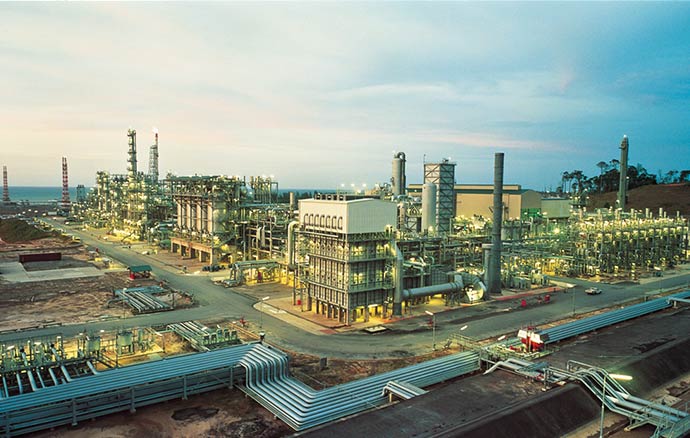
Gas Processing/Gas to Power
Purify the captured gas for sale to third parties to Substitute higher-cost fuels, such as gasoline and diesel currently being used in captive power generation.
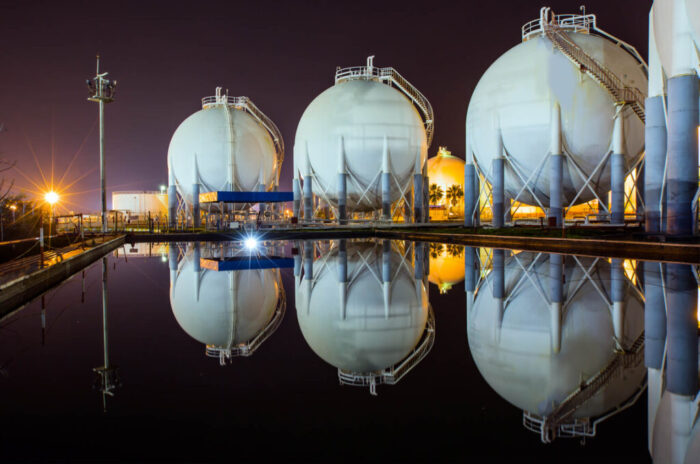
Gas to Energy Fuels
Converted to CNG or LNG depending on the relative prices of liquefaction and could be transported through virtual pipelines.
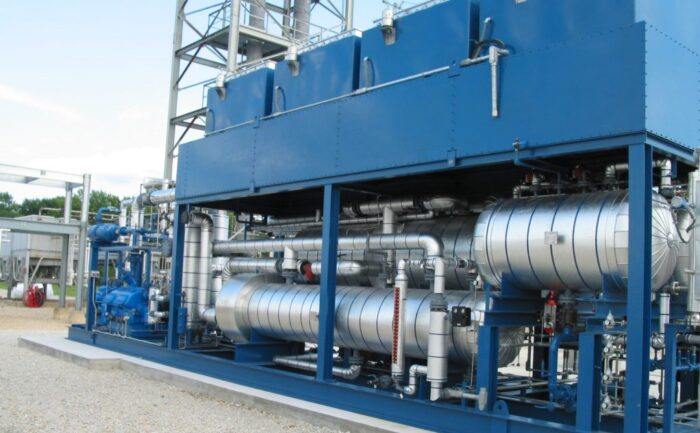
Gas to Liquids
Convert captured gas into longer-chain hydrocarbons, such as GTL fuel (GTL naptha, GTL normal paraffin, GTL gasoil and GTL baseoil) or Petrochemicals or Fertilizers
03 InfraLAB Objectives
Convert captured gas into longer-chain hydrocarbons, such as GTL fuel (GTL naptha, GTL normal paraffin, GTL gasoil and GTL baseoil) or Petrochemicals or Fertilizers

How Gas Commercilization Projects can be characterized by a high degree of revenues predictability under a (partial or full) Contracted Revenue Arrangement with a creditworthy counterparty
How Gas Commercilization Projects can be delivered under a fixed construction price and schedule with a Building (or EPC) Contractor with clear strategies for Optimal Operations during Post-Construction

How Gas Commercilization Projects can be governed independently with strong Governance Systems and operate in an environmentally sustainable manner from development stage to post-construction phase
Programme Outline
The goal of this programme is to equip infrapreneurs with an overview of Project Finance by taking them through all the stages of a Project Development Lifecycle to be able to develop and apply the skills-set to achieve investment-ready projects in Large Scale Gas Commercilization projects.
The InfraLAB Journey — Three Stages
The InfraLAB runs as a single continuous journey of roughly six months, with a formal gate at the end of each stage. A participant only advances to the next stage once the required deliverables are reviewed and accepted by The InfraLAB Programme Management Office.
InfraLAB sits between two points on every infrastructure project's life: the point at which a sponsor has a credible project, and the point at which that project can undergo genuine investment and financing due diligence from a DFI, development-equity investor, or construction lender.
It closes that gap through three structured stages — Project Definition & Investment Readiness, Investment Structuring & Transaction Readiness, and Capital Readiness & Financial Close Preparation — each gated by a continuously updated Investment Readiness Score, delivered jointly by The African Catalyst (ecosystem, methodology, incubation) and Brickstone Africa (transaction structuring advisory).
DURATION Self-paced, 4–6 weeks. Stage 1 is the gateway to The InfraLAB . It builds the sponsor’s foundational understanding of what separates a fundable infrastructure project from a good idea — covering infrastructure asset classes, the four-stage development lifecycle (Early Development, Pre-Financing, Financing & Post-Financing and Operations), SPV structuring fundamentals, and the three pillars of bankability. Every participant applies what they learn directly to their own project. WHAT YOU'LL PRODUCE Developing Infrastructure Projects (DIP) module notes — applying each concept to your own project as you progress. A Project Definition Report (PDR) — covering project summary, current development stage, key risks, a proposed Transaction Grid, sponsor capacity overview, and a 90-day action plan. GATE Formal review and sign-off of the PDR Presentation by the InfraLAB Programme Manager. On acceptance, InfraLAB issues the Stage 1 Completion Certificate and confirms eligibility for Stage 2.
DURATION 14 intensive days of hands-on workshops, typically delivered over 6–8 weeks. Stage 2 is InfraLAB’s core transformation engine. Every workshop is built around the sponsor’s own project data, and every session ends with a work product the sponsor owns and can use immediately with investors. Across the workshop series, participants work through: De-risking for Bankability — identifying and rating every material technical, commercial, legal and environmental risk, with a mitigation strategy and owner assigned to each. Achieving Predictable Cashflow — designing a contracted revenue structure, or scoping the demand study required to build one. Fixed Construction Delivery — defining an EPC contracting strategy, tender approach and O&M structure. Project Governance & ESG — closing gaps against IFC Performance Standards and drafting a formal Governance Charter. Financing Architecture — building working knowledge of DFI and commercial lending processes, guarantee instruments, blended finance and capital markets options. Bankable Commercial Structure — designing a finance-ready SPV and contract architecture and a Project Finance Roadmap to close. Financial Appraisal & Due Diligence — building a Preliminary Financial model with Brickstone Africa and a full Due Diligence Plan. WHAT YOU'LL PRODUCE — THE FIVE CORE DELIVERABLES (D1–D5) Project Bankability Plan · Project Finance Roadmap · Due Diligence Plan · Preliminary Financial Model · Investor Pitch Deck . GATE Consolidated expert review of all five deliverables against InfraLAB ’s bankability standards. On acceptance, ESIIR issues the Stage 2 Completion Certificate and confirms eligibility for Stage 3.
DURATION 90 days of sustained, embedded support. Stage 3 is where a well-structured investment case on paper becomes an actively de-risked, commercially engaged project. For 90 days, the InfraLAB Project Preparation Support Team sits alongside the sponsor’s Investment Readiness Office, running four components in parallel: Needs Assessment & Procurement Plan — a bankability gap assessment conducted to find the most critical data needed for Project Preparation to showcase bankability. This is now converted into a costed, sequenced procurement plan, with RFPs and tender documents drafted and ready to issue. Project Traction Development — building real commercial momentum: land and site control, offtaker and supplier engagement, regulatory approvals, and stakeholder relationships, tracked through an evidence-based Traction Score. InfraPitch Session Preparation — rehearsing and stress-testing the investment case, including mock investor sessions and due-diligence data room preparation, before it goes in front of real capital during the InfraPitch Event Structured Engagements & Programme Monitoring — monthly strategic reviews, milestone checkpoints, and a quarterly investment readiness scorecard that keep the 90-day roadmap on track. GATE On satisfactory completion of all four components, ESIIR issues the PPS Programme Completion Certificate together with a Project Preparation Readiness Scorecard, and the sponsor retains ongoing access to the ESIIR alumni network and strategic introductions. Delivered in Partnership with Brickstone Africa ESIIR’s financial modelling workshop and Stage 3 preparation support are delivered in partnership with Brickstone Africa, bringing institutional-grade financial structuring expertise to every cohort project.
InfraLAB — What You Walk Away With
Across the three stages, every InfraLAB participant produces a complete, investor-ready deliverables suite that is theirs to keep and deploy immediately:
S1-PDR
Stage 1 — Project Definition Report (PDR) A structured articulation of the project’s development thesis: project summary, current stage, key risks, a proposed Transaction Grid, sponsor capacity overview, and a 90-day action plan.
D1
Stage 2 · D1 · Project Bankability Plan A structured analysis of the project against the three bankability pillars — predictable cashflow, fixed construction delivery, and sustainable governance.
D2
D2 · Project Finance Roadmap A milestone-by-milestone map of the path from current development stage to financial close.
D3
Stage 2 · D3 · Due Diligence Plan A comprehensive framework of required due-diligence activities by workstream, with indicative timelines and cost estimates
D4
Stage 2 · D4 · Preliminary Financial Model An institutional-grade financial model built with Brickstone Africa, with scenario and sensitivity analysis.
D5
Stage 2 · D5 · Investor Pitch Deck An investor-ready presentation covering strategic rationale, commercial structure, risk framework, and roadmap — ready for DFI and equity investor meetings..
S3 - PPAP
Stage 3 — Project Preparation Action Plan A costed, sequenced roadmap of preparation activities, with market-ready RFPs, TORs and tender documentation
S3-Project Traction
Stage 3 — Traction Scorecard An evidence-based measure of project maturity across land control, permitting, offtake, supply chain, ESG, and government relationships.
S3-Investment Ready
Stage 3 — Investment Readiness Scorecard A board-ready, consolidated view of bankability, traction and preparation progress at programme close.
04 Sector pathways