


23rd September, 2026 | Lagos Oriental Hotel
Event Recap: InfraConnect 4.0
InfraCONNECT serves as a bridge between PROJECT OWNERS (Developers), PROJECT ENABLERS (Engineers, Advisors, Government Agencies), and CAPITAL PROVIDERS (Investors, Banks, Financial Institutions).
InfraConnect 4.0 Overview
Keynote Speech
Roadmap to Bankability
Special Presentation
Panel Session 1 & 2
Structured Event Networking
Structured Event Networking amongst Participants
Session Highlights
Overview of the Session
Opening Session
The fourth edition of InfraConnect, The African Catalyst's flagship infrastructure conference, was held on Wednesday, 23rd September 2026, at the Ballroom, Lagos Oriental Hotel, under the theme "Mobilising Capital: Accelerating Africa's Infrastructure Pipeline." The invitation-only event, co-hosted by Brickstone and sponsored by Kenna, brought together project developers, capital providers, and enablers for a day built around one central question: what does it actually take to move Africa's infrastructure ambition from idea to financial close?
THE ROAD TO BANKABILITY
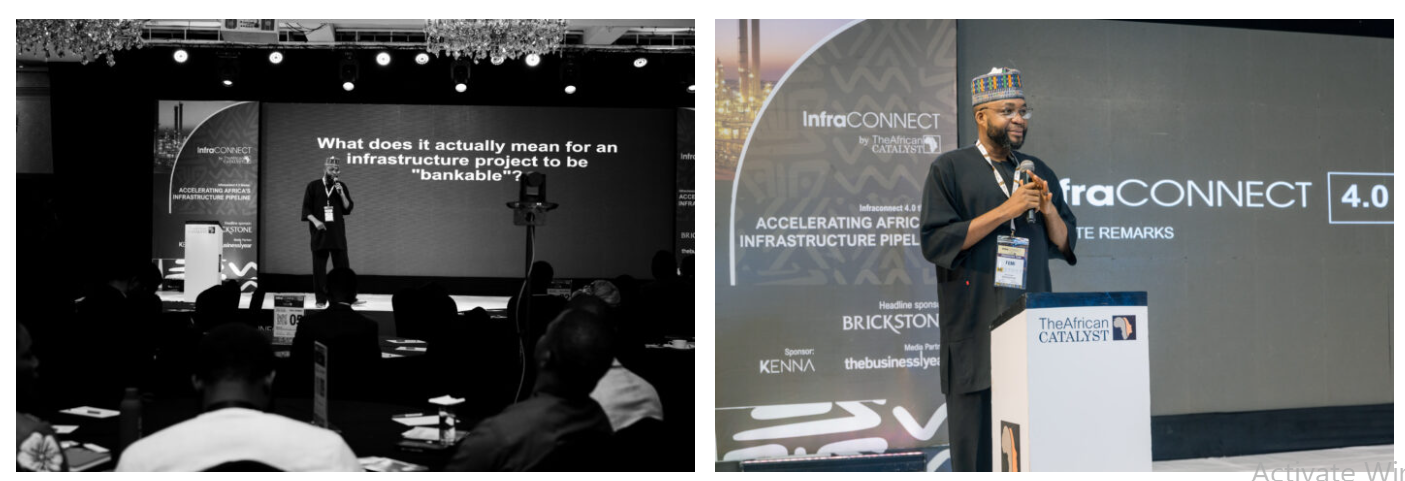
The day's keynote and special presentation were delivered by Mr Femi Awofala, CEO of The African Catalyst, under the title "The Long Road to Bankability."
Awofala traced the evolution of infrastructure finance in Africa across several distinct eras, from the extractive, transport-led investments of the early 1900s, through the founding of the World Bank and IFC and the shift toward sovereign-backed lending, to the debt crisis and privatisation waves of the 1970s that left much of the continent falling further behind through the 1990s. He pointed to the 2000s as a turning point, marked by Africa building its own institutions, including the Africa Finance Corporation, founded in 2007, and, in the years since, the move from one-off deals to repeatable platforms such as Africa50 and Scaling Solar, alongside growing infrastructure investment from pan-African banks.
The throughline of his address was this: Africa holds 18% of the world's population but commands only around 5% of global infrastructure investment, and the binding constraint today is no longer just capital; it is pipeline. Institutions like MIGA, AFC and Africa50 have widened access to capital, but too few projects are ready to absorb it.
Awofala walked through the investment readiness gap: the journey from an infrastructure need, to a project idea, to a defined project, to one that is genuinely investment-ready, deal-agreed, and able to reach financial close and construction. His central argument: bankability isn't a 200-page feasibility study or a polished deck; it's an accumulation of evidence across three pillars: predictable cash flow, fixed construction delivery and operations, and strong governance and sustainability.
He also made the case for equity as the foundation of any financing structure, the layer of capital that absorbs risk first, and argued that raising and structuring it is a distinct skill, one where investors are evaluating the people behind a deal as much as the deal itself. He closed by outlining The African Catalyst's own thesis: that the next chapter for African infrastructure isn't more capital or more ideas, but capability: building the people, preparation and investment readiness that let projects actually absorb the capital that already exists.
- 100
- Number of Attendees
- 20
- Corporate Organizations Attendes
- 3
- Panel Sessions
- 4
- Structured Networking Rounds
Panel Session One
Overview of the Session
Panel A: Cracking Early-Stage Equity
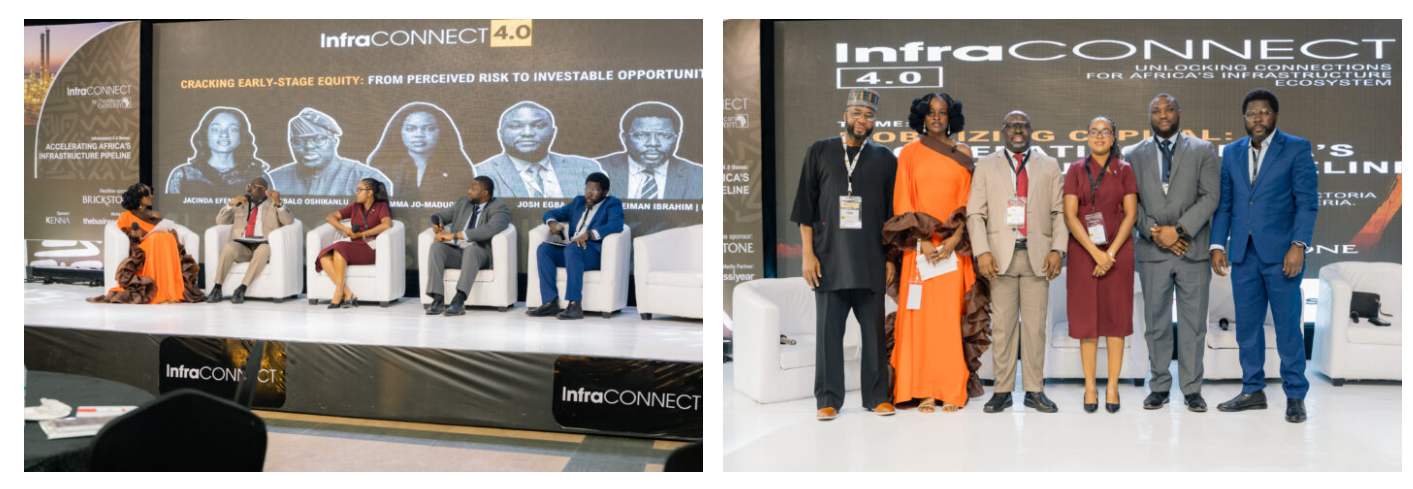
Moderated by Jacinda Efemenah (Programme Manager, Early Stage Infrastructure Investment Readiness, The African Catalyst), this session brought together Joshua Egba (USTDA), Jobalo Oshikanlu (ARM-Harith Infrastructure Fund Managers), Dr Ibrahim Suleiman (Dangote Infrastructure and Logistics), and Nimma Jo-Madugu (KENNA LP).
The panel converged on a consistent set of readiness markers: a credible sponsor with real execution capacity, genuine market demand, a viable pathway to financing, regulatory clarity and demonstrable development impact. Oshikanlu was direct about the state of the market; capital is available, but bankable deals remain scarce, and investors need a deliberate, blended-finance mindset rather than a passive one. Suleiman echoed the sentiment that there is sufficient capital chasing the right projects, pointing to offtake agreements, right of way, and the ability to hold to timelines as recurring sticking points. From the legal side, Jo-Madugu stressed early engagement with advisors, clear governance structures, and identifying material risks before they become deal-breakers.
Video Highlights
Overview of the Session
Video Highlights
Panel Session B: Unlocking Long Term Debt
Overview of the Session
Panel B: Unclocking Long Term Debt
The second panel examined what it takes for sponsors to reach financial close, featuring Dolu Olugbenjo (Stanbic IBTC Infrastructure Fund), Francis Oputeh (Rand Merchant Bank), Ekemini Isung (CardinalStone Umbrella Infrastructure Fund), alongside fellow panellists from Bank of Industry and Templars.
Olugbenjo framed infrastructure investing as inherently a partnership — no project gets built alone — and argued that what will move the needle for Nigeria's infrastructure landscape isn't more capital, but passion and sustained experience-building, wherever that experience starts. Isung emphasised that certainty of cash flow has to be guaranteed through strong contracting, while Oputeh's closing note was simple but pointed: bring in your advisors while you're still willing to change your mind, not after your position has hardened.
Magazine Launch
Overview of the Session
Magazine Launch
With both panel sessions complete, the programme moved into its closing segment: the launch of the TAC Magazine, a briefing on the structured networking format, closing remarks, and a guided networking session to round off the day.
Launch of the TAC Magazine
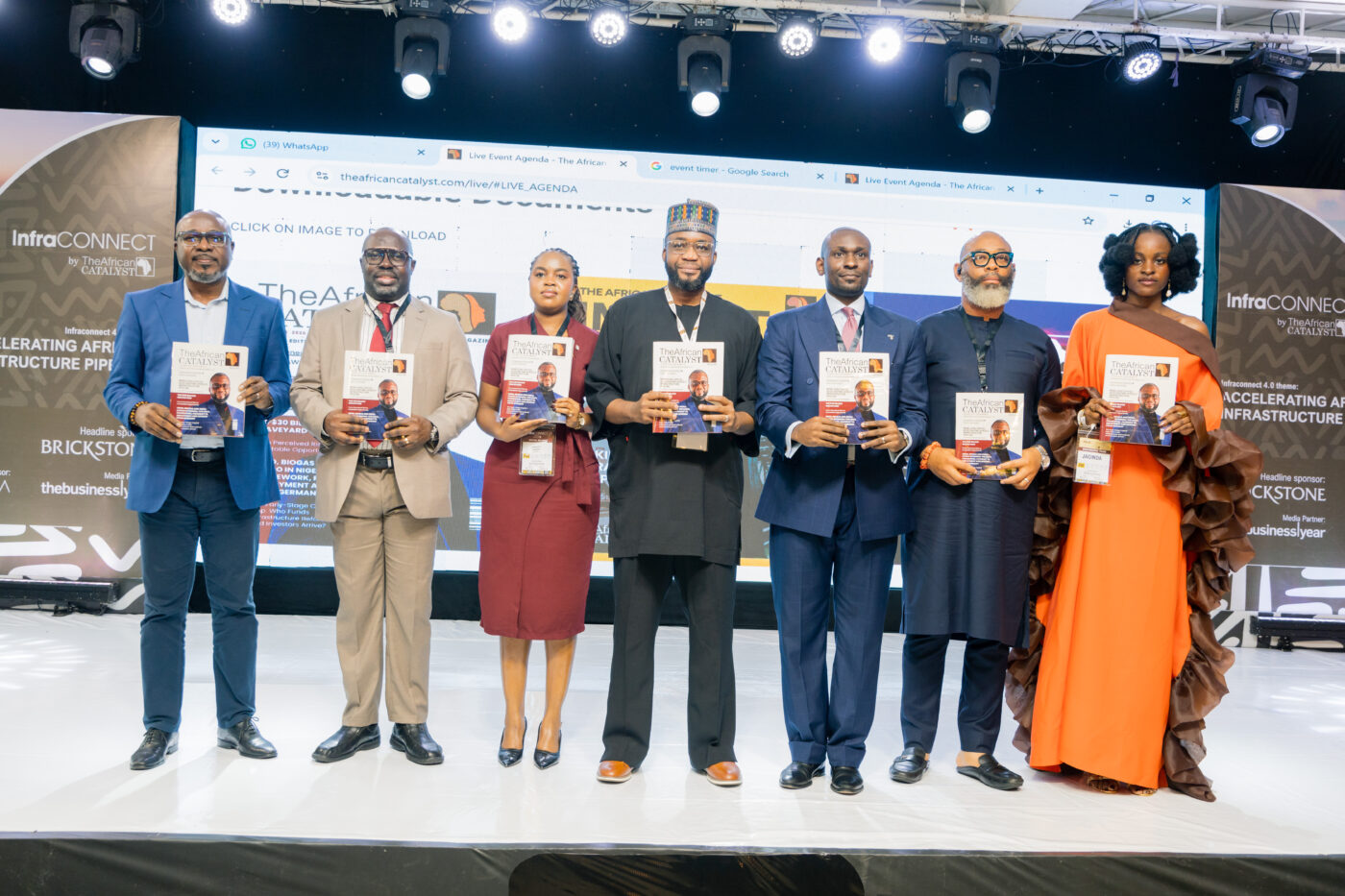
At 12:55 PM, attendees were joined by a special guest for the launch of the latest edition of the TAC Magazine, a thirty-minute segment that opened the final stretch of the day. Download the latest edition of the TAC Magazine here
Structured Networking
Structured Event Networking
At 1:25 PM, Kenneth Akan briefed the room on the networking session. Attendees were directed to their TAGs to confirm their table rounds and seat numbers, with the event support team on hand for anyone unsure of their placement. Mrs Destiny Donald-Igwe (Corporate Development Lead, The African Catalyst) then delivered the general announcements and closing remarks, after which guests broke for light refreshments.
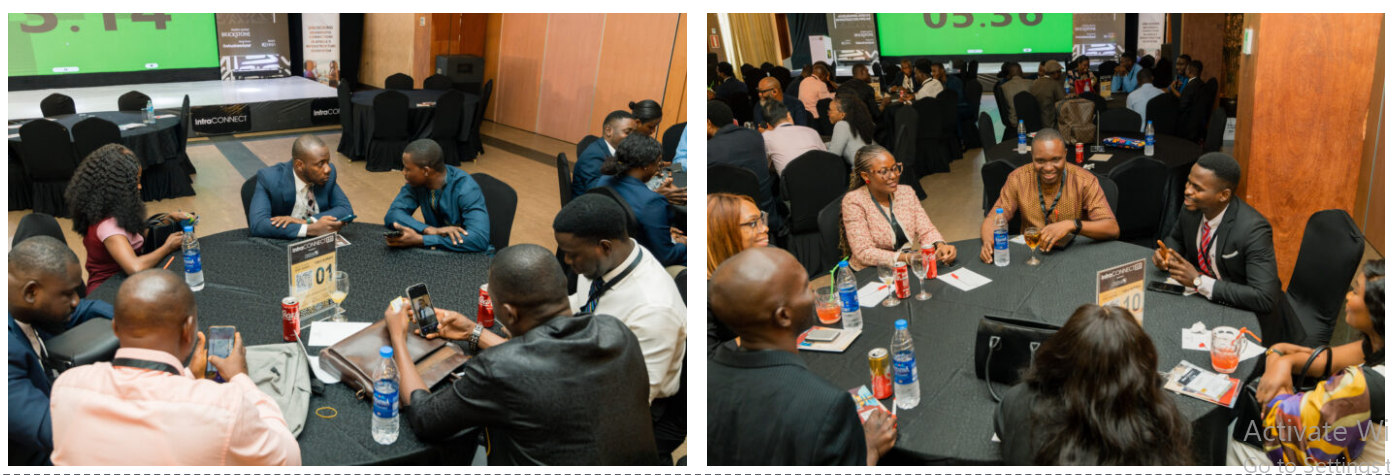
At 2:15 PM, the structured networking session began, running for an hour over drinks. It was a guided, round-based experience designed to foster meaningful connections among participants, jurors, mentors and industry professionals, giving each person the chance to share insights, explore collaboration opportunities and expand their networks within the infrastructure ecosystem. Attendees were encouraged to come prepared with a concise, 60-second introduction and to follow up after the event to turn first conversations into lasting relationships.
Organisers looking to bring the same format to their own events can host a structured networking session with The African Catalyst here.
Partner with us now
Partner with use in the upcoming InfraConnect