

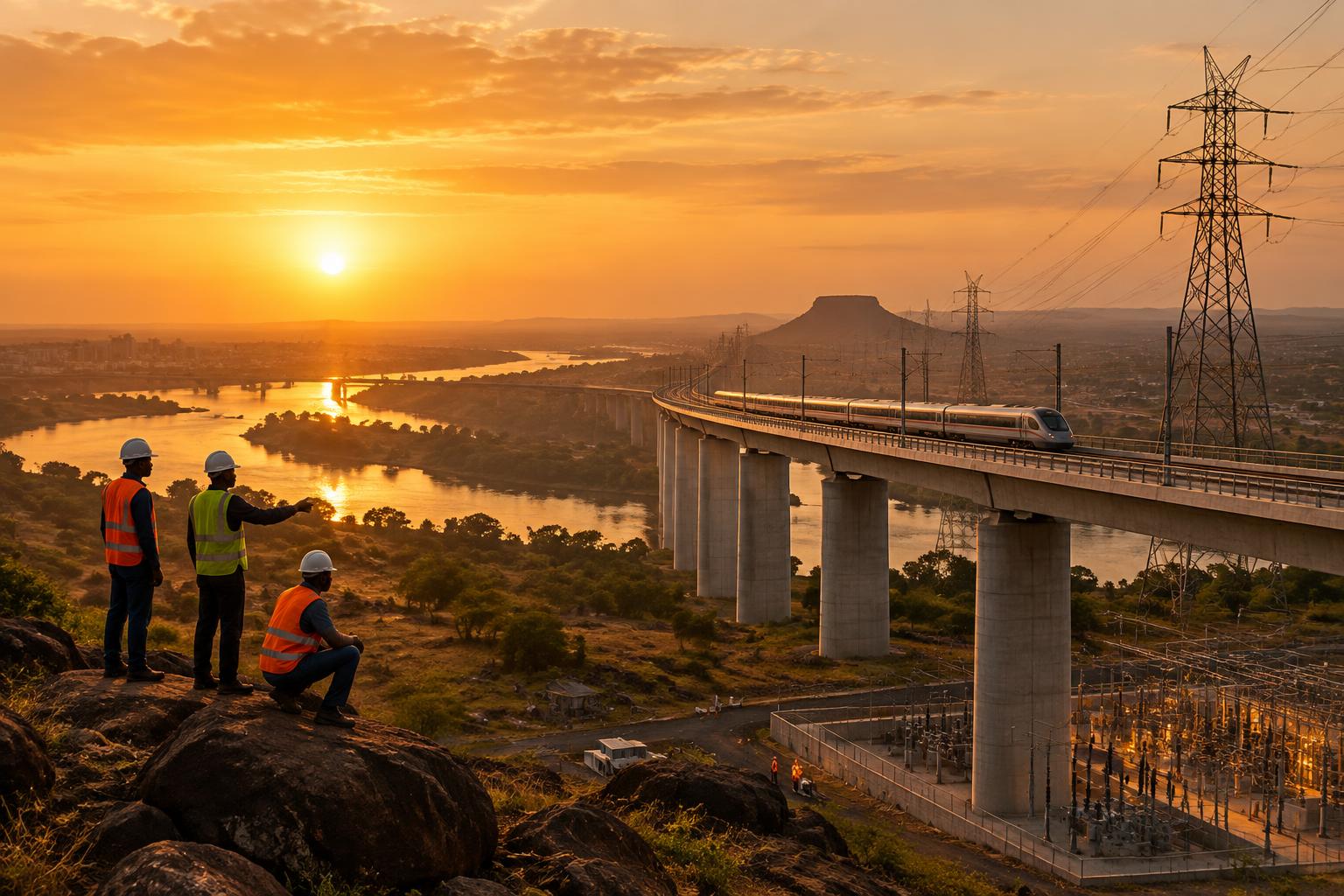
Infrastructure Ecosystem Mixer
The Infrastructure Ecosystem Mixer (IEM) is a curated networking and relationship-building event organized by The African Catalyst (TAC) to connect key stakeholders across Africa's infrastructure ecosystem in an informal, collaborative setting.
Infrastructure Ecosystem Mixer
Welcome & Opening Remarks
Infrastructure Ecosystem Building Panel Session
DFIP and Young African Leaders in Infrastructure Participants Recognition
Structured Event Networking
Session Highlights
Overview of the Session
Opening Session
The Infrastructure Ecosystem Mixer (IEM) Lagos Edition brought together key stakeholders across Africa's infrastructure ecosystem — project owners, enablers, and capital providers — for an evening of curated networking, insightful panel discussions, and community recognition. The event served as a vital precursor to TAC's flagship InfraConnect conference, creating space for meaningful relationship-building before formal engagements begin.
With approximately 80 attendees, the mixer delivered on its promise of an intimate, high-value gathering where infrastructure professionals could exchange ideas, explore partnerships, and identify investment opportunities
- 100
- Number of Attendees
- 20
- Corporate Organizations Attendes
- 3
- Panel Sessions
- 4
- Structured Networking Rounds
Introduction and Welcome Remarks
Overview of the Session
Opening Session
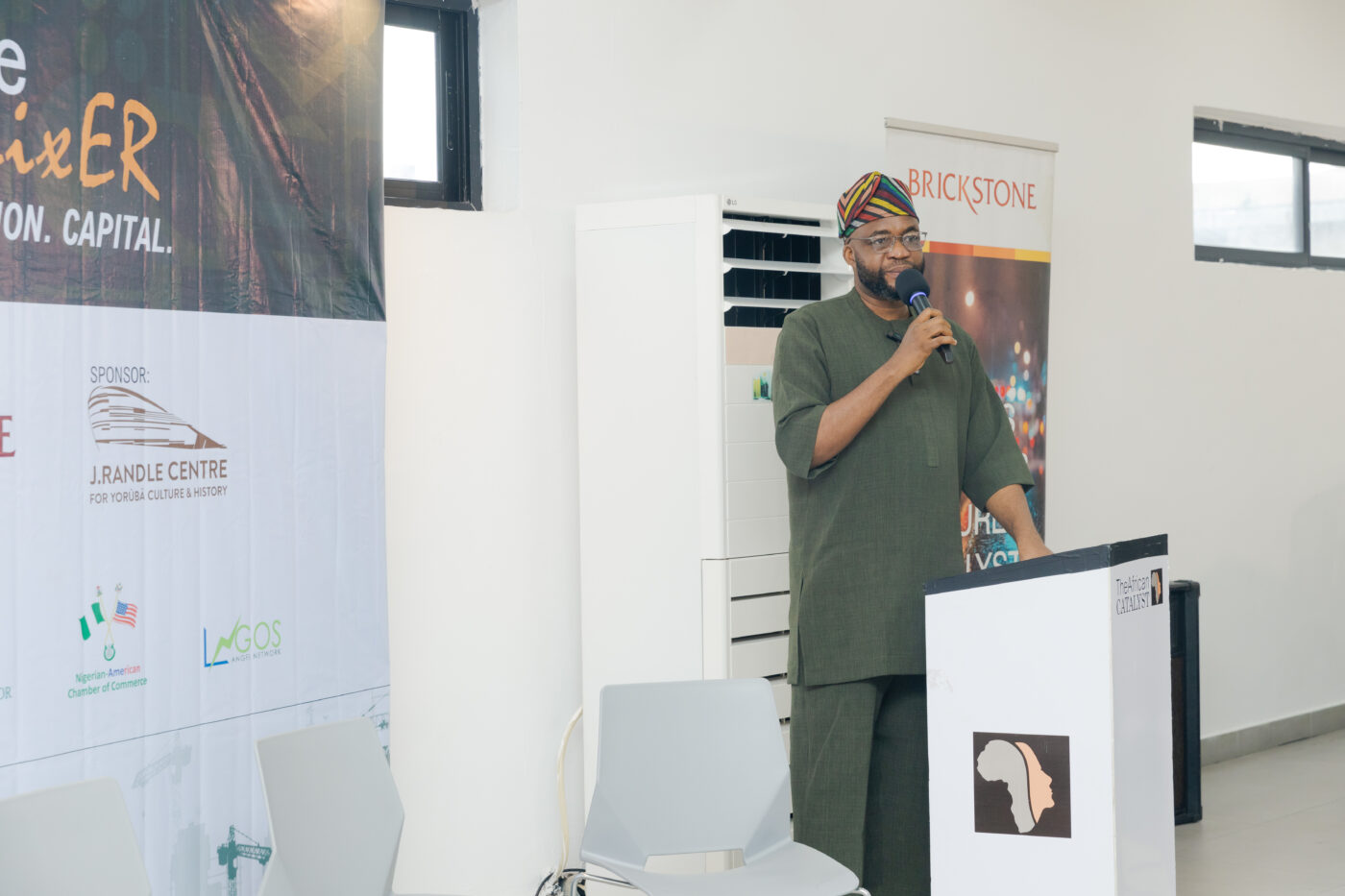
The evening commenced with opening remarks from Mr Femi Awofala, Convener of the African Catalyst Network and Lead Partner at Brickstone Africa.
Mr. Awofala set the tone by addressing Africa's persistent infrastructure gap — the chasm between the continent's vast infrastructure needs and the capital, expertise, and partnerships required to meet them. He walked the audience through The African Catalyst's suite of offerings designed to bridge this gap:
DFIP (Developing and Financing Infrastructure Projects): A capacity-building programme equipping professionals with the skills to develop bankable infrastructure projects.
InfraPitch: A platform where project developers present their ideas to investors and receive structured feedback.
InfraConnect: TAC's flagship infrastructure conference, now in its 4th edition, scheduled for 23 September 2026.
YALIF (Young African Leaders in Infrastructure Fellowship): A fellowship programme recognising and developing emerging infrastructure leaders.
He emphasised that infrastructure is not a one-man business — it thrives on collaboration, partnerships, and coordination across various levels.
Video Highlights
Overview of the Session
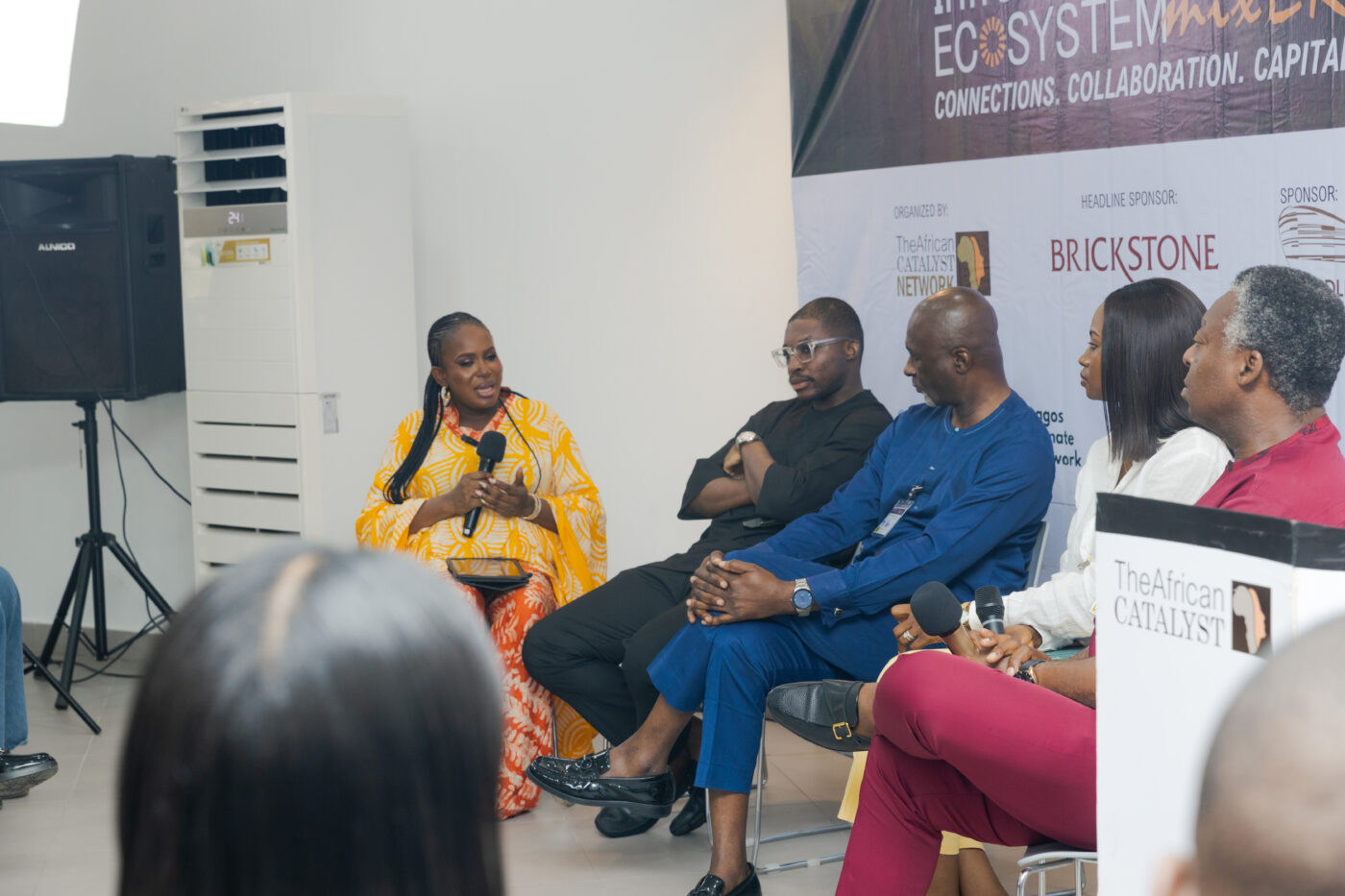
Panel Session: Early-Stage Investing in Energy Transition Projects in Nigeria "What's the Role of Your Community?"
Moderator: Destiny Donald-Igwe
Lagos Angel Network
Moderator: "Angel capital is often the first believer in a venture before it becomes 'investable' by institutional standards. What would it take for Lagos Angel Network's members to lean further into early-stage energy transition deals, and what does a strong first cheque look like in this sector?"
Response — Miranghe Pela, Lagos Angel Network:
At the Lagos Angel Network, we fund early-stage projects. However, we have observed that some mistakes are made when evaluating energy projects — one of the most significant being the belief that power is not a fundable asset. That we do not have power. This is a misconception we are actively working to debunk.
The reality is that we can create more affordable power options for both end-users and investors. Power is not inherently a capital-intensive sector; we simply need to rethink the models we use to finance it.
One of the solutions we are exploring is the creation of a syndicate fund specifically for power projects. This would allow multiple angel investors to pool resources, share risk, and collectively back projects that would otherwise be too large for any single investor to support.
For us to lean further into energy transition deals, we need to see:
Clear, credible financial models that demonstrate viability
Realistic assumptions about revenue streams and operational costs
Evidence that the project economics have been stress-tested
A clear understanding of the risks involved and how they will be managed
A strong first cheque from us looks like an investment that is backed by thorough due diligence, where the project developer has done the work to validate their assumptions and articulate a clear path to returns."
Women in Energy Network
Moderator: "Women-led energy ventures remain persistently underfunded despite strong track records. What specific role should Women in Energy Network play in shaping how early-stage capital flows to women founders and women-led funds in Nigeria's energy transition?"
Response — Chioma Inyama, Women in Energy Network:
Women-led energy ventures are consistently underfunded — this is a fact. And it is not because women-led projects do not perform. They do. Often, they perform better. But the capital does not flow to them at the same rate.
The Women in Energy Network grows as a community, and that community has a critical role to play. We must be the bridge between women founders and the capital that is available — because the funds are there. But there is often doubt regarding readiness. Investors question whether a venture is prepared to absorb and deploy capital effectively.
That is why training is so important. We need to ensure that women founders undergo the kind of structured training that proves their readiness — not just to investors, but to themselves.
But there is another layer to this. The conundrum that many women face is the pressure of pursuing success in their business while also being expected to be the perfect wife, mother, and in-law. This is a real barrier that is rarely discussed in investment circles. We need to acknowledge it and create systems that support women through it.
Ultimately, what is required is a mindset change — both among investors who must take women-led ventures seriously and among women founders who must see themselves as capable of attracting and managing large-scale capital. The Women in Energy Network is committed to driving that change on both fronts.
Nigerian American Chamber of Commerce (NACC)
Moderator: "From an investment analysis standpoint, what does 'bankability' look like for an early-stage energy transition project in Nigeria today — and how can the NACC community, as stewards of investment rigor and ethics, help close the gap between promising projects and investable ones?"
Response — Dr. Ikenna Nwosu, Nigerian American Chamber of Commerce:
Let me start with what financiers are actually looking for. They are interested in one thing above all else: the pipeline. They need to see a clear, credible pipeline for their money to return — with returns. Without that visibility, capital simply will not flow.
Now, here is the reality we are facing. Intervention from the Central Bank of Nigeria has been removed. This means that projects can no longer rely on CBN support to bridge financing gaps. They must stand on their own two feet in the market.
And that is where we encounter a problem: the Nigerian financial sector is not yet adequately supporting the energy transition. Our banks and financial institutions are still structured around traditional models that do not fully accommodate the unique risks and opportunities of energy transition projects.
We also need to be honest about how Nigeria is perceived. We are known globally as a gas-producing country with some oil. That identity shapes how international investors view us and our energy transition potential. We need to actively reshape that narrative.
So, what does bankability look like? It looks like a project that has:
A clear, credible financial model
Realistic, well-researched assumptions
A thorough understanding of the risks involved and a plan to mitigate them
A route to market that makes commercial sense
And what is NACC's role? Our role is to create in-country trade missions that connect Nigerian projects to outside capital and partners. We must bridge the gap between local projects and international investors, ensuring that Nigerian energy transition projects are seen, understood, and funded.
CFA Society Nigeria
Moderator: "From an investment analysis standpoint, what does 'bankability' look like for an early-stage energy transition project in Nigeria today – and how can the CFA Society Nigeria community, as stewards of investment rigour and ethics, help close the gap between promising projects and investable ones?"
Response — Ekoh Sagoe, CFA:
To understand bankability, we must first understand capital. Different types of capital carry different risk appetites — and as a project developer, you need to know which type of capital is right for your project at each stage of its lifecycle. Early-stage capital behaves very differently from institutional capital, and what one sees as bankable, the other may not.
At the heart of bankability is the economics of the project. We must validate the assumptions being used — and I mean really interrogate them. Are your revenue projections realistic? Have you stress-tested your cost assumptions? What happens if the exchange rate moves against you? What happens if your timeline slips?
Every project has risks. The question is not whether you have risks — it is whether you understand them and whether you are actively mitigating them. De-risking is what separates projects that attract investment from those that do not. Investors want to see that you have thought through the challenges and have credible plans to address them.
So, what does bankability look like? It is a project that can demonstrate:
Financial viability through robust, well-validated modelling
A clear understanding of sector-specific risks and how they will be managed
A credible team capable of execution
A realistic route to market and revenue generation
As a society, our goal must be to close the gap in investment knowledge. The more informed both investors and project developers become, the more efficiently capital will flow to the projects that need it. That is where the CFA Society Nigeria comes in — as stewards of investment rigour and ethics, we have a duty to elevate the standard of financial analysis and decision-making across the ecosystem. We must educate, we must advocate, and we must hold ourselves and others to the highest standards.
Recognition of DFIP Participants and YALIF Fellows
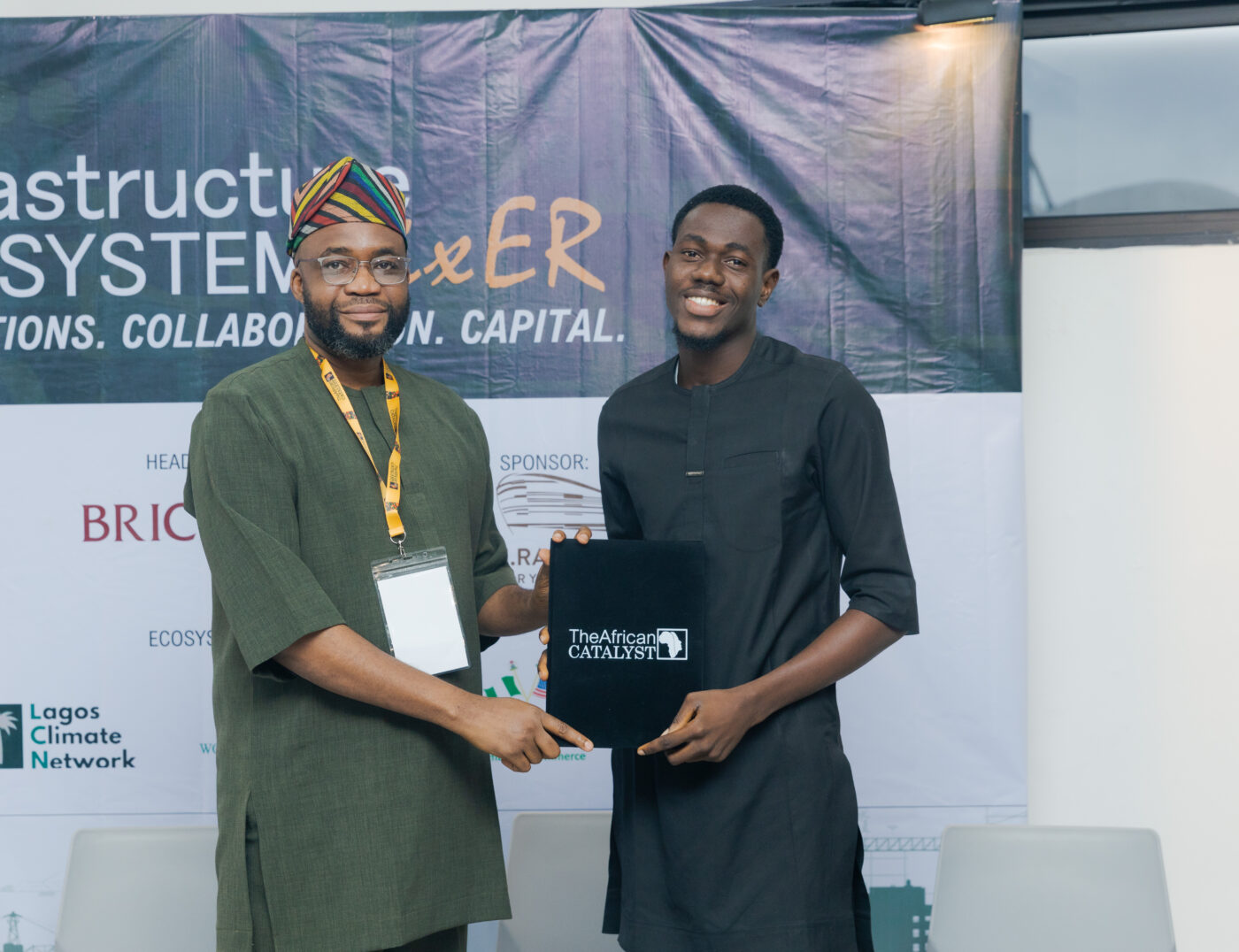
Following the panel session, Jacinda Efemenah took the stage to present awards to participants of the DFIP-9 programme and Fellows of the Young African Leaders in Infrastructure Fellowship (YALIF).
The DFIP Awards recognised the top three attendees who demonstrated exceptional commitment, analytical depth, and mastery of infrastructure project development principles.
The YALIF Fellows were celebrated for their creativity and strong grasp of the concepts that drive successful infrastructure development. This moment marked the culmination of their fellowship journey.
Introduction of Structured Event Networking (SEN)
Bimpe Adebanjo then introduced InfraConnect 4.0, TAC's flagship infrastructure conference, scheduled for 23 September 2026 at the Lagos Oriental Hotel, Victoria Island, Lagos. Ushers distributed invitation banners to all attendees.
The Concept: SEN is designed to remove the awkwardness often associated with networking. Rather than leaving interactions to chance, the programme guides participants through structured, timed conversations at assigned tables.
How It Worked:
Attendees checked their event badges to identify their assigned table for each round.
Each round lasted approximately 20 minutes, during which participants engaged in focused conversations.
At the end of each round, attendees moved to their next assigned table.
The objective was simple: meet someone new at every round.
Objectives of SEN:
Expand professional networks
Meet people outside immediate circles
Exchange ideas
Identify potential collaborations
Discover projects and investment opportunities
Build relationships beyond the event
The SEN session ran successfully, with attendees rotating through three rounds and making meaningful connections across the infrastructure ecosystem.
Closing Remarks
The evening concluded with closing remarks from Janelle George.
She thanked:
All IEM participants for their engagement and presence
Ecosystem partners for their support in making the event possible
She extended an open invitation to all attendees to participate in InfraConnect 4.0 in September, encouraging them to build on the connections made that evening.
Event Outcomes
The Infrastructure Ecosystem Mixer Lagos Edition successfully:
Strengthened relationships within Africa's infrastructure community
Facilitated introductions between project sponsors, investors, advisors, and government representatives
Promoted collaboration across the infrastructure value chain
Showcased emerging initiatives including DFIP, YALIF, and SEN
Built momentum ahead of InfraConnect 4.0
Looking Ahead
The African Catalyst continues its mission to bridge the gap between infrastructure projects and the capital, expertise, and partnerships required to bring them to fruition.
Upcoming Events:
InfraConnect 4.0: 23 September 2026, Lagos Oriental Hotel, Victoria Island, Lagos
InfraPitch Winner
Overview of the Session
InfraPitch Winner
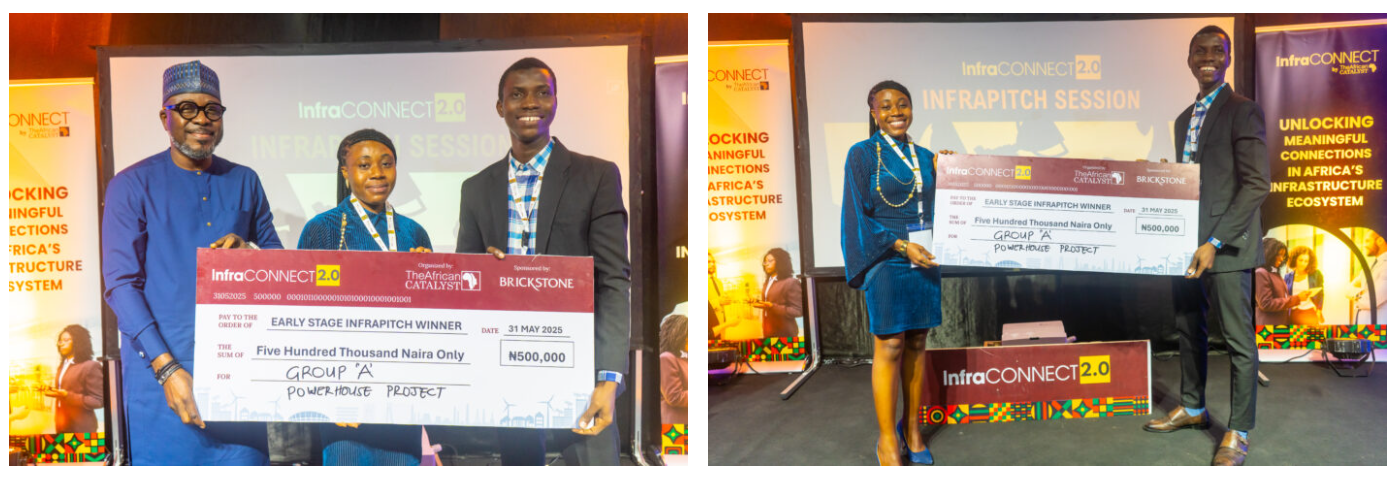
With 63 points, Group A claimed the top spot at InfraPitch with their 55MW gas power project in Anambra. Their win was praised for commercial realism, technical clarity, and investor credibility. Narrowly edging past Groups B and C, Group A’s pitch captured what InfraConnect is all about—locally driven, well-structured, and scalable infrastructure development.
KEY DISCUSSION SUMMARY
The final moments of InfraPitch at InfraConnect 2.0 brought with them a surge of anticipation, energy, and unfiltered joy as the winning team of this year’s Developing and Financing Infrastructure Programme (DFIP) pitch showcase was announced. After an intense and insightful round of presentations, questions, and jury feedback, it was time to shift from analysis to celebration—and the audience was more than ready.
With playful suspense and lively music, the emcee built up the atmosphere, teasing the scores and invoking friendly tension. Jokes flew, small chops were promised (with or without chicken), and the crowd responded in kind, equal parts laughter and expectation.
Third Place: Group D – Epe Green City
The first reveal came with the announcement of Group D, whose bold vision for Epe Green City secured them third place with 61 points. The team had earlier presented a transformative masterplan for a sustainable, smart urban development in Lagos. While ambitious and well-designed, the judges had raised questions about environmental integrity, resettlement planning, and housing affordability—critical feedback that, while constructive, ultimately placed them in third. Still, the applause was loud and sincere, a recognition of the team's compelling narrative and effort.
Second Place (Tie): Group B and Group C
Then came the surprise twist—a tie for second place. With 62 points each, Group B and Group C stood shoulder to shoulder as co-runners-up.
Group B had pitched the Lagos-Calabar Coastal Highway, a project brimming with regional economic significance and AfCFTA-aligned ambition. Their vision to build a toll-based, 700km trade corridor across Nigeria’s southern belt was lauded by the jury for its scale and strategic potential, though questions about feasibility, funding clarity and revenue projections tempered the final score.
Group C offered a markedly different approach, presenting an infrastructure framework for fertilizer production and agricultural input distribution. Their clear understanding of risk management, supply chain logic, and development finance frameworks impressed the jury. However, uncertainties around pricing assumptions and subsidy dependency left room for further refinement.
Still, both teams walked away with their heads held high, receiving the recognition they had earned and the encouragement to take their projects further. The tie itself was symbolic, showcasing how both visionary transport and pragmatic agribusiness infrastructure can co-exist as critical engines for Africa’s growth.
First Place: Group A – 55MW Independent Power Project
With 63 points, a narrow yet decisive lead, the winner of InfraPitch 2024 was Group A.
Their proposal for a 55MW gas-fired Independent Power Plant in Anambra State emerged as the most balanced and technically sound project of the day. The team's decision to scale down from an initial 500MW concept to a more realistic 55MW demonstrated financial maturity and alignment with Nigeria’s capital markets. Their approach combined practical energy economics, regulatory awareness, and structured offtake planning.
Jobalo Oshikanlu commended the team’s ability to “know their lane” and plan within credible bounds of execution. Bode Ojeniyi acknowledged the team’s commercial realism and echoed the importance of ditching non-bankable instruments like corporate guarantees. Cecilia Akintomide, while pressing the team earlier on demand-side certainty, now praised their overall performance, encouraging them to refine off-taker engagement but affirming the viability of the project framework.
Femi Awofala, visibly pleased with the outcome, noted that the winning team exemplified everything the DFIP program sought to instil—project realism, discipline, and the courage to iterate.
The applause for Group A was thunderous. As music swelled and a giant symbolic cheque was handed to the team, smiles beamed, and photographs began. It wasn’t just the group standing there that won; it was a win for what The African Catalyst represented—an Africa where infrastructure development starts with knowledge, not just capital.
Structured Networking
Structured Event Networking
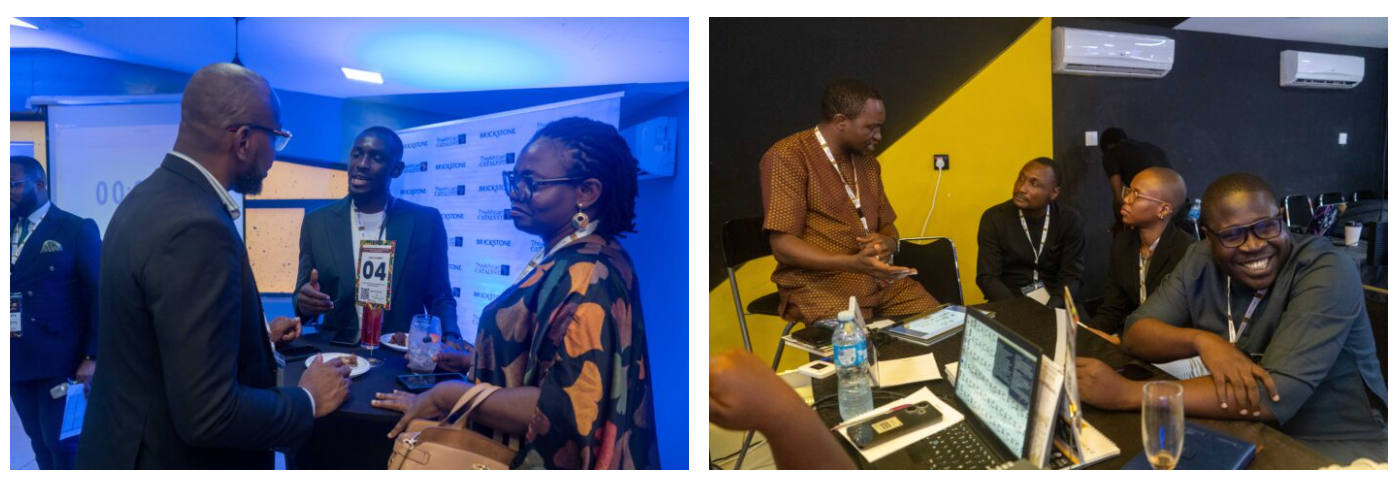
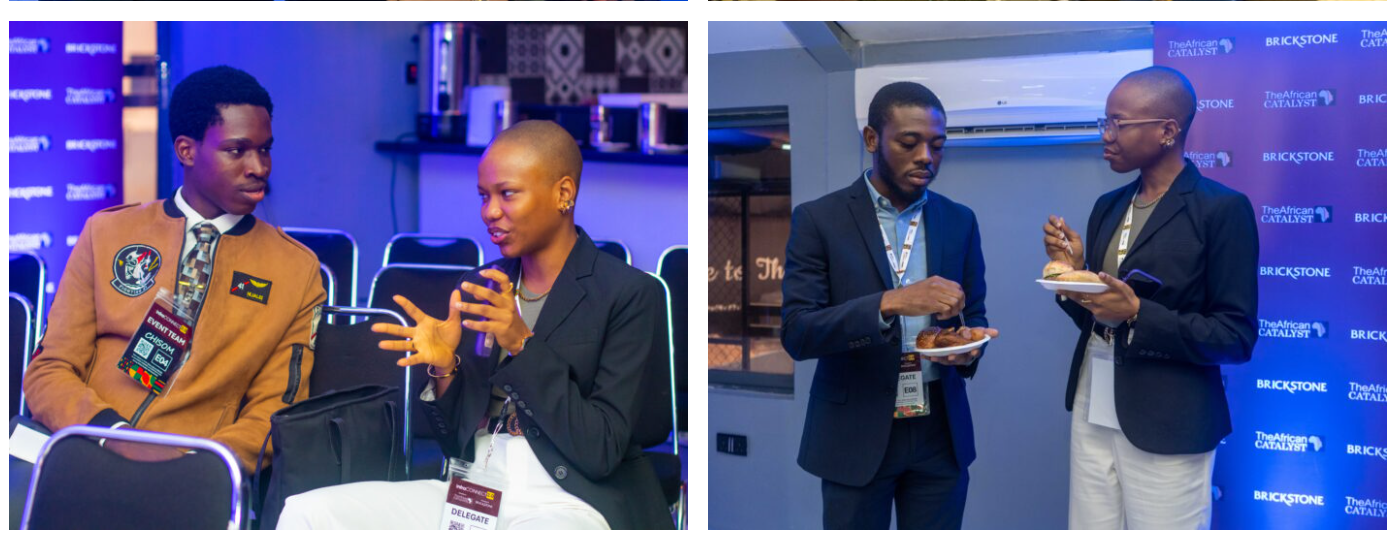
The event culminated in an innovative Structured Event Networking (SEN) session, designed to maximize meaningful connections among participants. This segment consisted of ten carefully organized rounds, with each round lasting ten minutes. During these sessions, professionals (project developers) pitched their work in Infrastructure or related fields to a small group of four participants comprising a project enabler and technical consultant, rotating through different groups in each round. This structured approach ensured that participants could forge relevant connections with professionals who could contribute to their project success and help bridge the early-stage infrastructure gap.
Partner with us now
Partner with use in the upcoming InfraConnect